Why Muscle Matters: The Missing Foundation of Health, Longevity, and Energy
Modern fitness has a branding problem.
We’re told to chase sweat, calories burned, exhaustion, step counts, heart-rate zones, endless classes, and “more intensity.”
But many people doing all of that still feel:
tired
soft
inflamed
stressed
weak
injured
stuck
frustrated with their body
Why?
Because they’re neglecting the single most important tissue for long-term health and performance:
Muscle.
Not just for aesthetics. Not just for athletes. Not just for men.
Muscle is one of the most powerful drivers of health, resilience, metabolism, confidence, and longevity available to every adult.
And if you’re over 30, busy, stressed, or noticing lower energy, it becomes even more important.
Muscle Is Not Vanity. It Is Vitality.
Many people still associate building muscle with bodybuilding culture, vanity, or “getting bulky.”
That misunderstanding costs people years of progress.
According to Dr. Gabrielle Lyon, skeletal muscle is the organ of longevity.
That means muscle isn’t just something attached to the body.
It actively influences how well the body functions.
It helps regulate:
blood sugar
insulin sensitivity
metabolism
inflammation
energy production
mobility
recovery capacity
brain health
healthy ageing
physical independence
In other words:
Muscle helps determine how well you live now, and how well you age later.
Why Most Adults Are Fighting the Wrong Battle
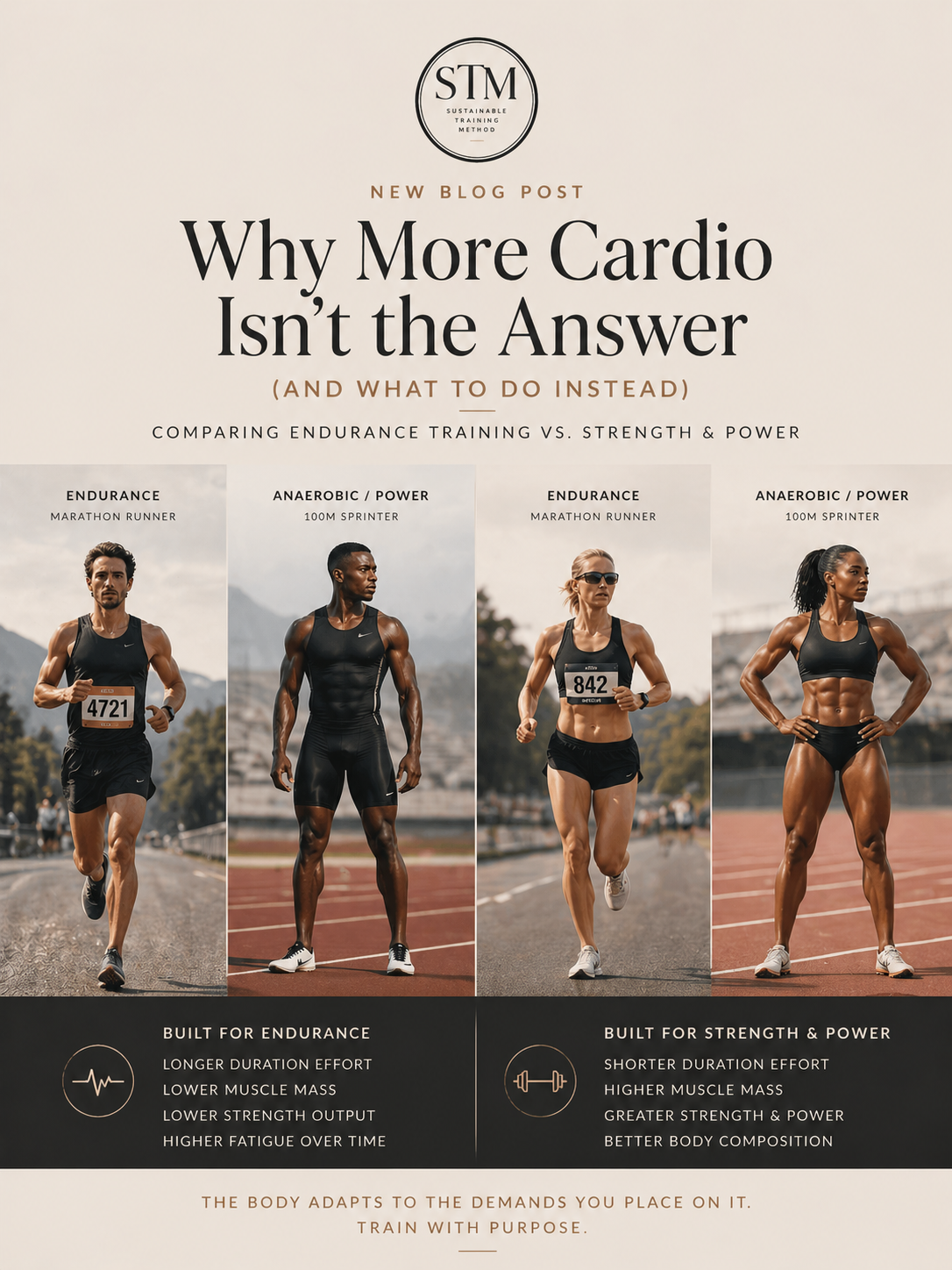
Many people spend years trying to lose weight while ignoring muscle.
They slash calories. They do endless cardio. They chase fatigue. They train harder and harder.
But if you lose weight without preserving or building muscle, you often become:
lighter, but weaker
smaller, but softer
tired, hungry, and stressed
more prone to rebound weight gain
metabolically worse off long term
This is one reason many people “work out” consistently but never look, feel, or function better.
They are trying to shrink instead of strengthen.
Muscle Controls Blood Sugar and Metabolic Health
Your muscles are one of the primary places glucose is stored and used.
When you have more healthy muscle tissue and train it regularly, your body generally becomes better at handling carbohydrates and regulating blood sugar.
That matters because poor blood sugar control is tied to fatigue, cravings, energy crashes, inflammation, and long-term disease risk (type 2 diabetes, alzheimer's, etc...).
More muscle often means:
better insulin sensitivity
steadier energy
better nutrient partitioning
improved body composition
easier weight management
better hormone and fertility
This is why strength training is often one of the smartest investments for people struggling with energy, belly fat, or “doing everything right but not changing.”
Muscle Supports Brain Function and Mental Performance.
Training muscles doesn’t only affect muscles.
When you contract skeletal muscle through resistance training, the body releases signalling molecules called myokines that influence many systems, including the brain.
Exercise also supports:
blood flow to the brain
mood regulation
stress resilience
cognitive performance
long-term brain health
Many people notice this practically.
They train consistently, and suddenly they think clearer, feel calmer, and perform better at work.
That is not accidental.
Muscle Is Your Insurance Policy Against Ageing
After around age 30, many adults begin gradually losing muscle mass and strength if they do nothing.
This decline accelerates with inactivity.
Loss of muscle and strength is associated with:
frailty
falls
reduced mobility
poor recovery after illness
lower independence
lower quality of life
Strength matters enormously as you age.
Can you get off the floor? Can you carry groceries? Can you catch yourself if you trip? Can you lift luggage? Can you stay active with your kids or grandkids?
These are not gym questions.
They are life questions.
Bone Density, Tendons, and Real-World Resilience
Proper strength training doesn’t just build muscle.
It also helps improve:
bone density
tendon strength
connective tissue tolerance
posture
balance
coordination
joint stability
This becomes critical later in life.
Falls, fractures, hospital stays, and loss of independence often begin a downward spiral for older adults.
A stronger body is a more resilient body.
Why More Cardio Is Often the Wrong Answer
Cardio has value.
Walking, aerobic fitness, conditioning, and general movement matter.
But many people are already under-recovered, under-muscled, under-slept, overworked, and undernourished.
Then they add:
five HIIT classes
long endurance sessions
bootcamps
circuits every day
more calorie burn less calorie consumption
That often adds stress without solving the real problem.
Especially for busy professionals and parents already carrying high life stress.
If recovery is poor, nutrition is poor, sleep is poor, and strength is neglected, more volume can dig the hole deeper.
You don’t need more punishment.
You need more adaptation.
Strength Training Is the Highest-Leverage Use of Limited Time
If you have 2–4 hours per week to invest in your body, intelligent resistance training is often the highest-return option.
Why?
Because it can simultaneously improve:
muscle mass
strength
metabolism
bone density
confidence
body composition
movement quality
energy
long-term health markers
Very few training methods give that much return per hour invested.
This is why smart strength training is ideal for busy adults.
Why You May Not Be Seeing Results
If you’ve been training hard but not seeing the results you want, common reasons include:
too much cardio, not enough resistance training
no progressive overload
random workouts
poor technique
not enough protein
under-eating calories chronically
poor sleep
excessive stress
no recovery strategy
no measurable progression
Hard work without direction is common.
Results require the right stimulus.
The Sustainable Training Method Philosophy
We believe training should build your life, not consume it.
That means:
build muscle
get stronger
recover properly
eat enough to thrive
manage stress
improve blood markers
move well
stay capable
train for decades, not weeks
No extremes. No burnout. No trend-chasing.
Just intelligent progress.
What to Prioritise Right Now
If health, longevity, and performance matter to you:
1. Lift weights consistently
2–4 quality sessions per week can be transformative.
2. Prioritise protein
Muscle needs raw materials. Animal protein's are your best source of protein, nutrients, and healthy fats (meat, eggs, and dairy).
3. Sleep like it matters
Because it does.
4. Walk daily
Low-stress movement supports recovery.
5. Progress gradually
Strength compounds.
6. Stop chasing exhaustion
Train to improve, not just to feel smashed.
Final Truth
The goal is not to be skinny.
The goal is not to survive workouts.
The goal is not to win the calorie burn war.
The goal is to become harder to kill, easier to move, stronger to live with, and more capable every year.
Muscle helps you do that.
Build it. Protect it. Keep it.
Ready to Train Smarter?
If you want expert coaching built around strength, health, longevity, and real life, book a consultation with Sustainable Training Method.