Strength Is Freedom: Why Men in Midlife Must Train for Strength First
Most men say they want more freedom.
More time. More energy. More ability to travel, explore, play, and actually use their life.
But freedom doesn’t come from having fewer responsibilities. Freedom comes from capacity. And capacity is built on strength.
Strength Declines With Age, Whether You Like It or Not
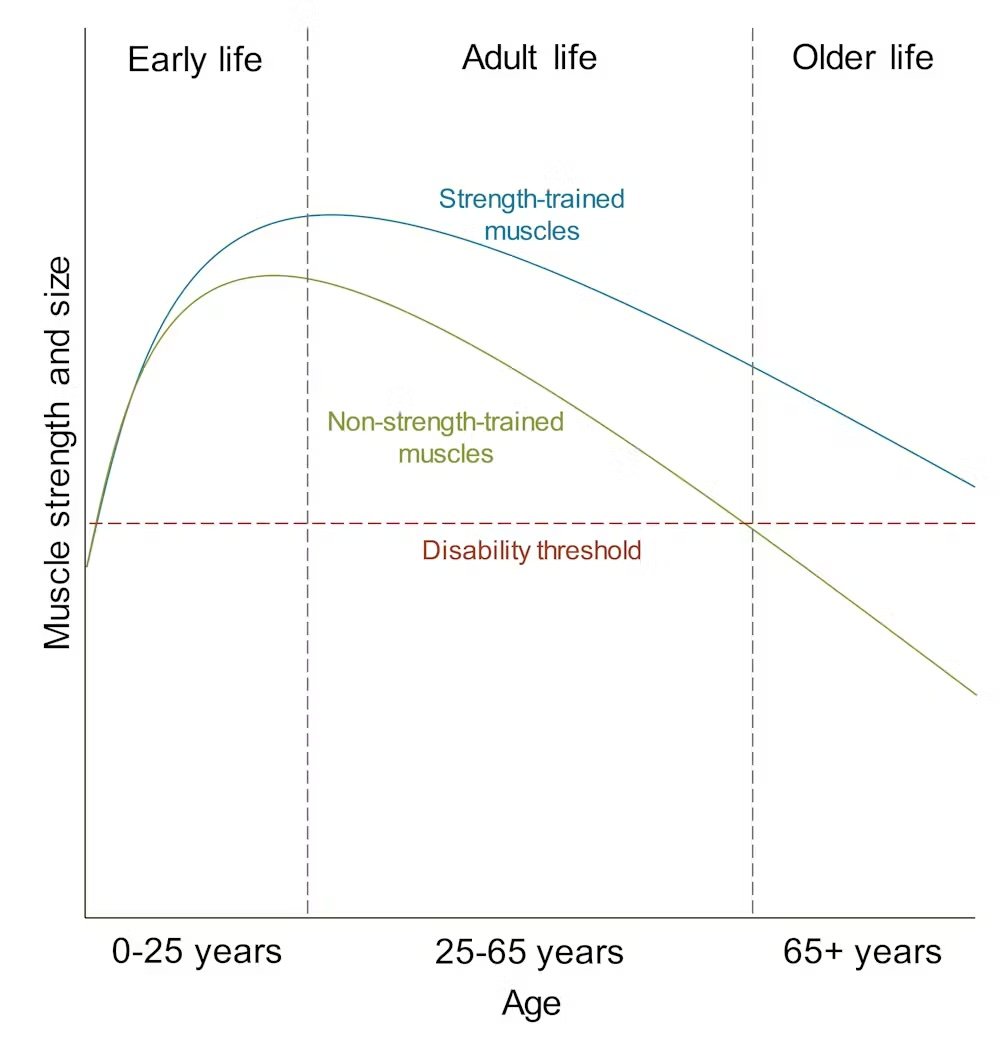
From around the age of 30, we begin to lose muscle mass at a rate of approximately 3–8% per decade, with the rate accelerating after the age of 60 [1][2].
Strength tends to decline even faster than muscle size. A comprehensive review of longitudinal studies shows that after around age 50, strength loss can average between ~1.5–5% per year, depending on the muscle group and testing method used [3].
By midlife, this isn’t theoretical, it’s measuable.
If you don’t actively train for strength, your body adapts in the opposite direction:
Less muscle
Less strength
Less resilience
This age-related loss of muscle and strength is known as sarcopenia, and it doesn’t just affect how you look, it affects how you live.
Strength Loss Tracks Directly to Quality of Life
Strength isn’t about lifting impressive weights in a gym.
It’s about:
Getting off the floor
Standing up from a chair or toilet
Carrying bags, kids, or luggage
Walking confidently without fear of falling
Staying independent as you age
Longitudinal research consistently shows that declines in muscle mass, strength, and power are strongly associated with reduced physical function and poorer quality of life in older adults [4][5].
In simple terms: When strength goes down, life gets smaller.
Strength Is a Vital Sign (Not Just Grip Strength)
Grip strength is commonly used in research because it’s simple to measure, and lower grip strength is associated with:
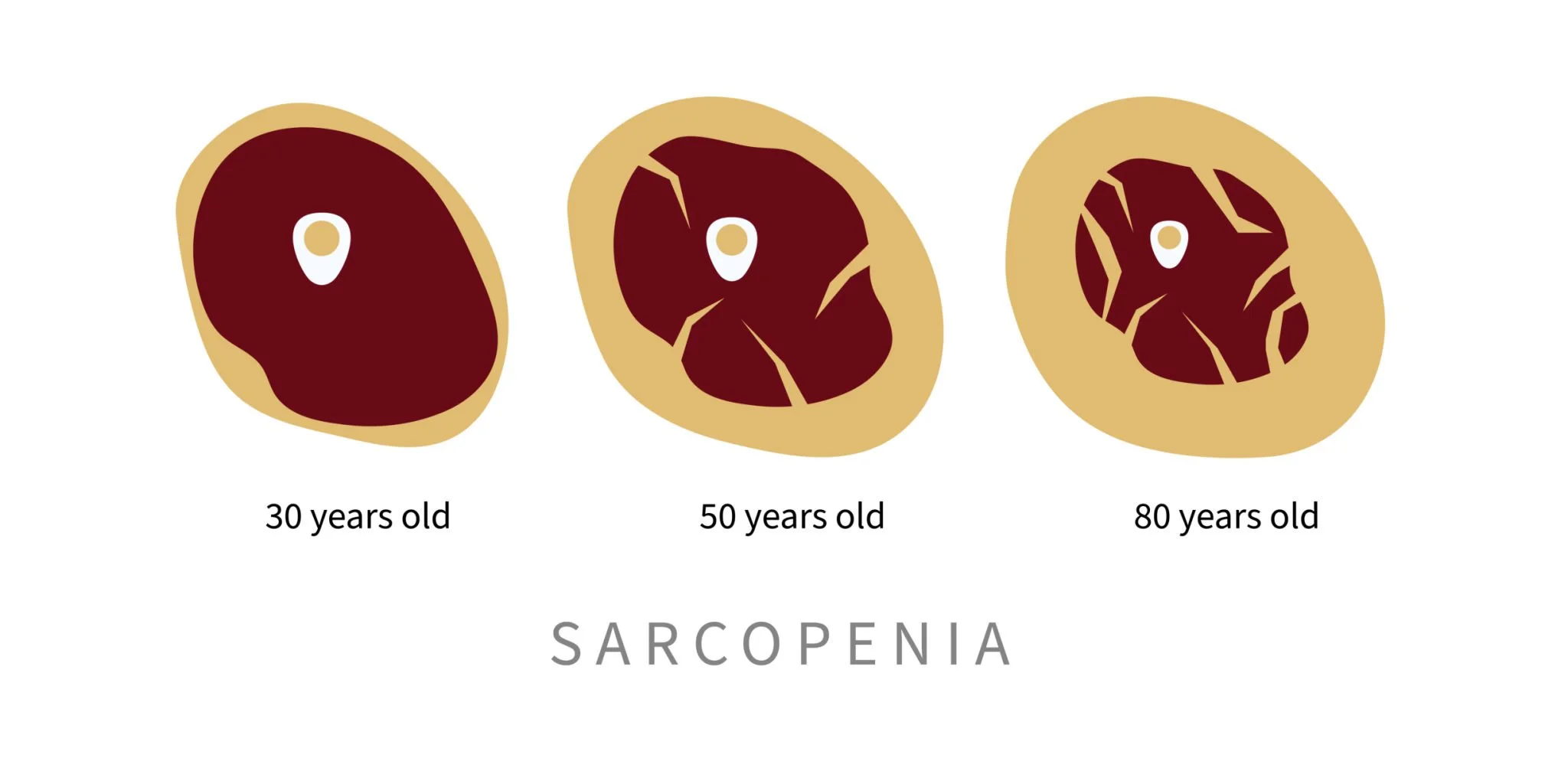
When men don’t lift weights to build and maintain lean muscle, they lose it.
Higher all-cause mortality
Increased cardiovascular risk
Poorer outcomes following illness
A large international study involving over 140,000 adults found that lower grip strength was a stronger predictor of mortality than systolic blood pressure [6].
Grip strength is not perfect — it’s influenced by sleep, nutrition, fatigue, and recovery — but it serves as a useful proxy for overall physical robustness.
Importantly, lower-body strength may be even more critical.
Greater leg strength is associated with:
Better mobility and balance
Reduced fall risk
Greater independence
Improved survival following hospitalisation or serious illness [7][8]
If you ever end up injured, ill, or bedridden, your ability to recover will depend heavily on how much muscle mass and strength you had going into that situation.
Strength is insurance.
Muscle Is the Organ of Longevity
Muscle is not “extra weight.” It’s not vanity tissue. It’s a metabolic and endocrine organ.
Skeletal muscle is responsible for the majority of insulin-mediated glucose uptake in the body, making it a key regulator of blood sugar control and metabolic health [9][10].
Resistance training has been shown to:
Improve insulin sensitivity
Improve glycaemic control
Reduce risk factors for metabolic disease
These effects occur even in older adults [11][12].
In addition, contracting muscle releases signaling molecules known as myokines, which play roles in inflammation regulation, metabolic health, and whole-body resilience [13].
If you care about:
Body composition
Energy levels
Hormonal health
Long-term health and independence
Then you should care about muscle.
The Cardio Trap (And Why Strength Must Come First)
Many men still believe: “If I do enough cardio, I’ll be healthy.”
Cardiorespiratory fitness does matter — higher fitness levels are associated with lower all-cause mortality risk [14].
But here’s the key issue:
Cardio alone does not reliably maintain muscle or strength.
High volumes of endurance training, particularly when performed without resistance training, can interfere with strength and muscle development, a phenomenon known as the interference effect [15].
This doesn’t mean cardio is bad.
It means cardio is not the foundation.
Strength training:
Builds muscle and strength
Improves metabolic health
Uses the cardiovascular system (heavy squats prove this quickly)
Delivers greater return per minute when time is limited
For busy men in midlife, strength-first training is the most efficient strategy.
Cardio should support strength, not replace it.
When I Bought Into the Endurance Myth
In my early 30s, I fell into this exact trap.
I genuinely believed that endurance athletes (marathon runners, triathletes, Ironman competitors) were the fittest, healthiest men on the planet. I put them on a pedestal and assumed that if their endurance was exceptional, their health and longevity must be too.
So I committed fully.
I ran marathons. I trained for triathlons. I completed Ironman events.
And on the surface, I looked fit.
But underneath, my health was quietly declining.
I was the lightest I’d ever bee, but that weight loss wasn’t fat. It was muscle. I was also the weakest I’d ever been.
Yes, I had stamina. Yes, I had endurance. I could run, swim, and cycle all day.
But I couldn’t pick anything heavy up with confidence. And if I did, it often hurt.
That loss of muscle came at a cost.
The chronic stress of high-volume endurance training also took a toll on my gut health. I experienced symptoms many endurance athletes quietly deal with bloating, inconsistent digestion, poor sleep, and signs that my system wasn’t coping.
You don’t often hear about this side of endurance sport, but behind the scenes, many athletes deal with ongoing gut and recovery issues.
At the time, I ignored the signals.
Stepping Into the Gym Changed Everything
When I became a personal trainer, I was still competing in endurance sports. But as I studied under mentors like Charles Poliquin and Derek Woodski, something became very clear: I had been avoiding strength training.
Not because I didn’t believe in it, but because I wasn’t confident.
I didn’t know how to squat properly. I didn’t know how to deadlift. And if I’m honest, there was some shame around that.
It felt easier to lace up a pair of shoes and go for a run than to step into a gym and risk looking inexperienced.
But once I stepped onto the gym floor and learned how to lift weights properly, everything changed.
I became more aware of my body. My movement improved. My bone density improved. My lean muscle mass increased. My strength improved. My confidence improved.
I wasn’t trying to get “big.” I was trying to get capable.
And once I made that shift, I never went back to endurance training.
That chapter was complete. The myth had been busted.
Strength Requires Training, Not Hope
You don’t stay strong by accident.
Muscle and strength are use-it-or-lose-it traits.
A practical framework for most men:
2 sessions per week → maintenance
3 sessions per week → consistent progress
4 sessions per week → optimal for most men (if recovery is managed)
More is not better if recovery suffers. Consistency beats intensity. Training should support your life — not consume it.
A Season-of-Life Shift Back to Strength
For several years, I focused heavily on gymnastics-style training:
Handstands
Rings
Bodyweight strength
Flexibility and skill work
It felt great, but it demanded time and focus I no longer had.
As a father, partner, and business owner, I needed training that was:
Efficient
Structured
Aligned with long-term health and longevity
So I returned to strength training.
Clear sessions. Defined sets and reps. Sixty minutes, done with intent.
Now I’m running a six-month strength-focused phase built around:
Squats
Deadlifts
Presses
Chin-ups
Not to chase ego — but to build capacity.
Because feeling strong changes how you show up everywhere else in life.
Strength Is Freedom
Freedom isn’t just time away from work.
Freedom is:
Traveling without fear of physical breakdown
Playing with your kids pain-free
Saying yes to adventure
Trusting your body to do what you ask of it
That kind of freedom requires strength.
And strength doesn’t come from hope. It comes from training on purpose.
What to Do Next
If you’re a man in midlife and you value:
Health
Confidence
Independence
Longevity
Then strength training needs to be non-negotiable.
Start simple. Train consistently. Put strength first.
If you want guidance, structure, or coaching support, explore the Midlife Maverick Online training options and choose the path that fits your season of life.
Your future self will thank you.