
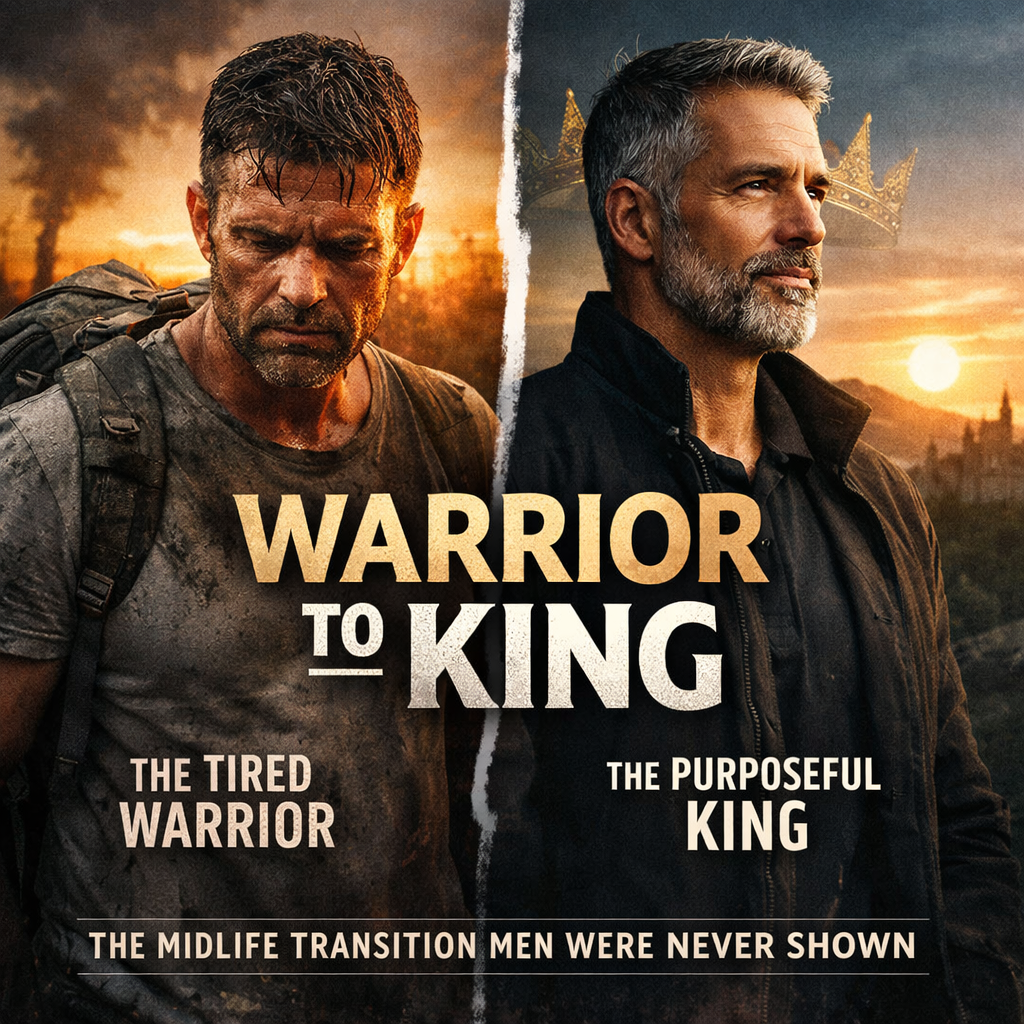
The Tired Warrior: Why So Many Men Feel Exhausted in Midlife
Over the past few months I’ve been thinking a lot about what men in midlife actually need.
Inside the Midlife Mavericks community, I’ve been having conversations with men who are working hard, raising families, building businesses, and trying to hold everything together.
From the outside, many of them look successful.
But underneath that success, there’s something else going on.
A quiet exhaustion.
Not just physical fatigue, but the deeper kind that comes from carrying responsibility for a long time without ever putting the load down.
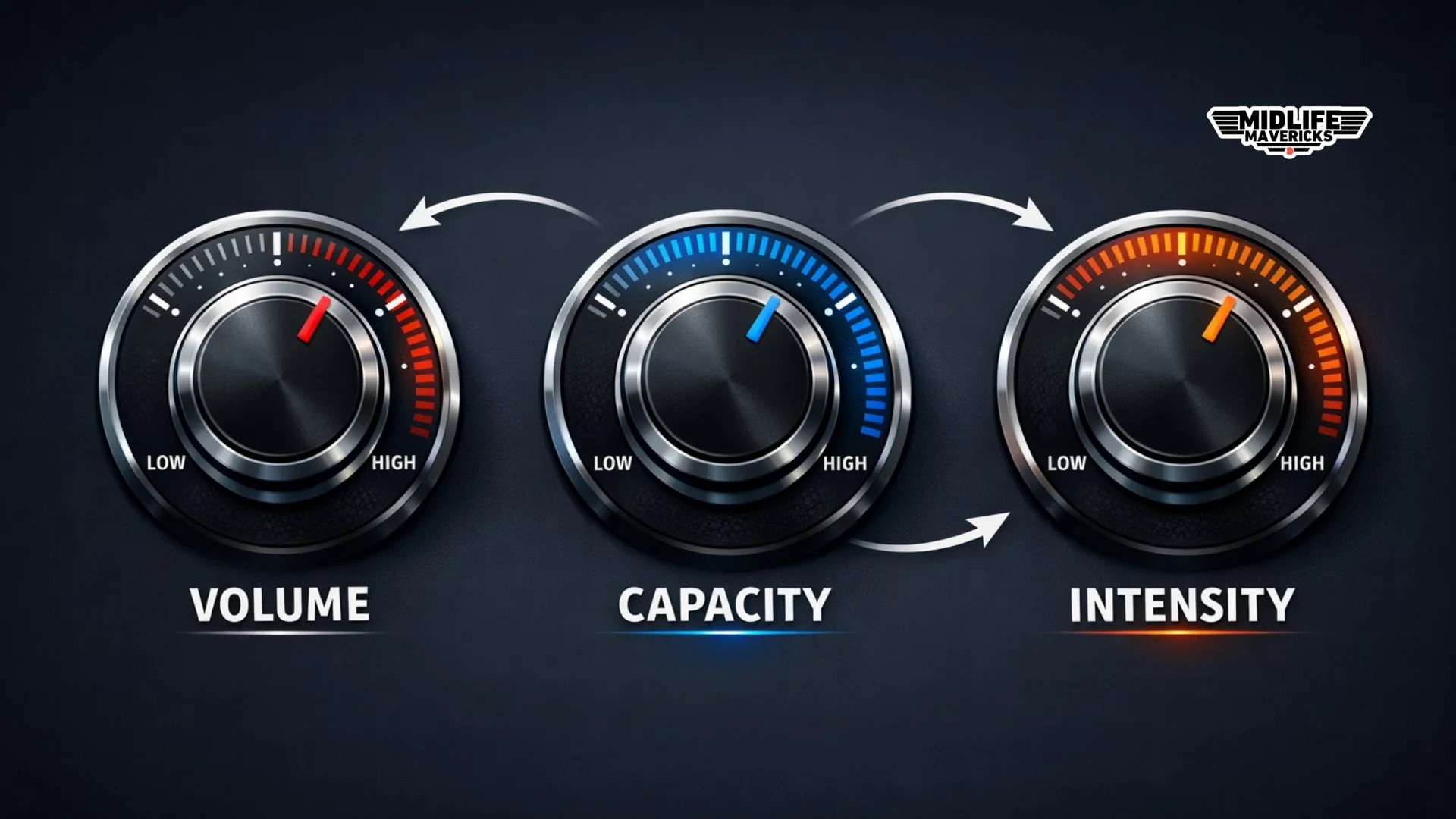
How to Train Smarter in Midlife, Not Just Harder
In your 20s and 30s, effort is simple. More feels better. More volume, more intensity, more sessions. You recover quickly, your schedule is looser, and your identity is still trying to prove something to yourself and to the world. That’s the Warrior phase. And in that phase, “train harder or go home” works often enough that it becomes the default belief.
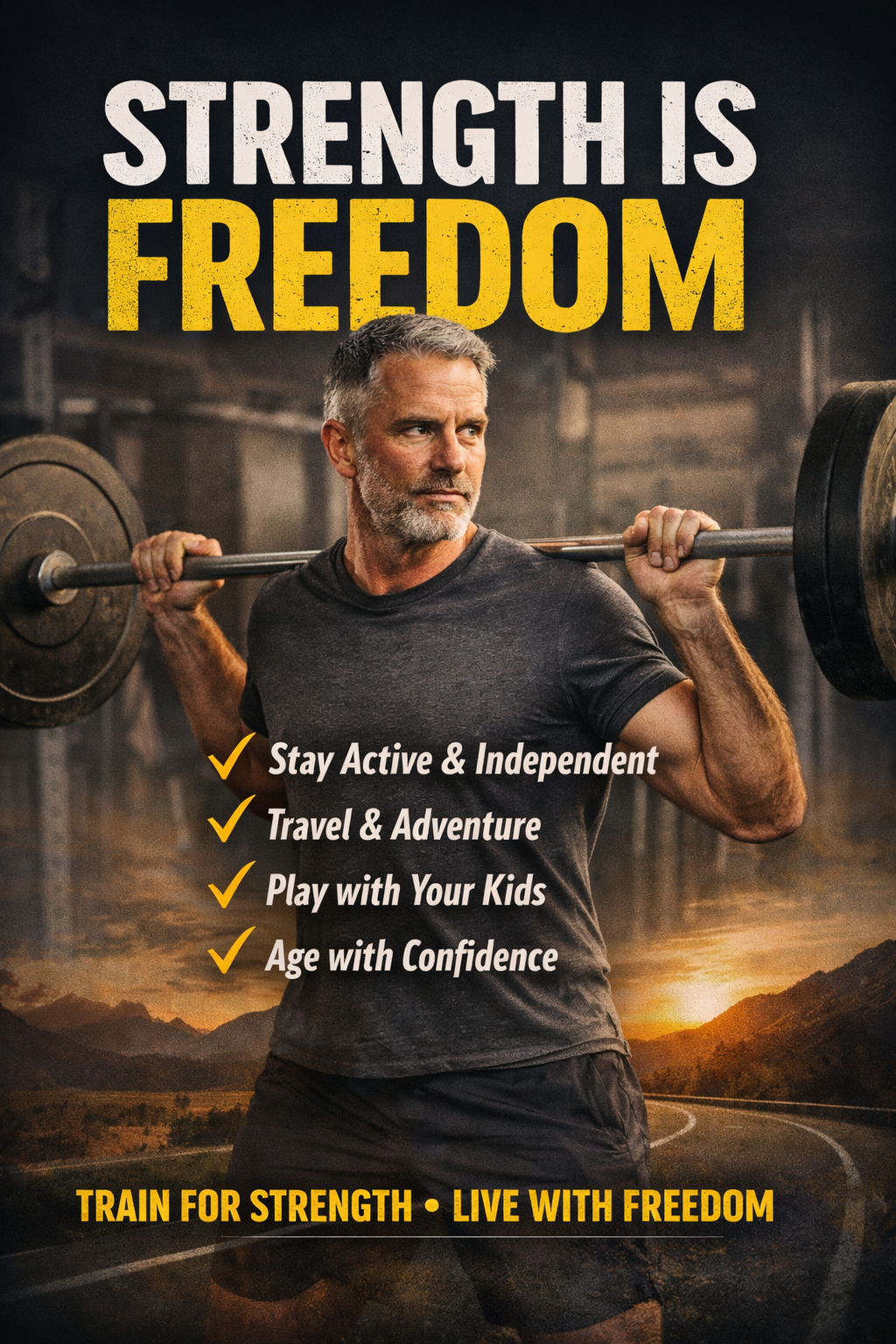
Strength Is Freedom: Why Men in Midlife Must Train for Strength First
Most men say they want more freedom.
More time. More energy. More ability to travel, explore, play, and actually use their life.
But freedom doesn’t come from having fewer responsibilities. Freedom comes from capacity. And capacity is built on strength.
From around the age of 30, we begin to lose muscle mass at a rate of approximately 3–8% per decade, with the rate accelerating after the age of 60.

Stress, the Nervous System, and Why Your Back Pain Isn’t Just a Training Problem
If you’re a man in midlife dealing with persistent back pain, chances are you’ve asked some version of this question:
“What should I be doing in the gym to fix my back?”
It’s a fair question. You train. You care about your health. You want to solve the problem.
But after years of working with men in their 40s and 50s, I’ve noticed a consistent pattern:
Many of the men with ongoing back pain are wired.
They’re switched on from the moment they wake up. Anxious. Busy. Driven. Always thinking ahead. Always in "go mode."
And their nervous system never really gets a chance to stand down.
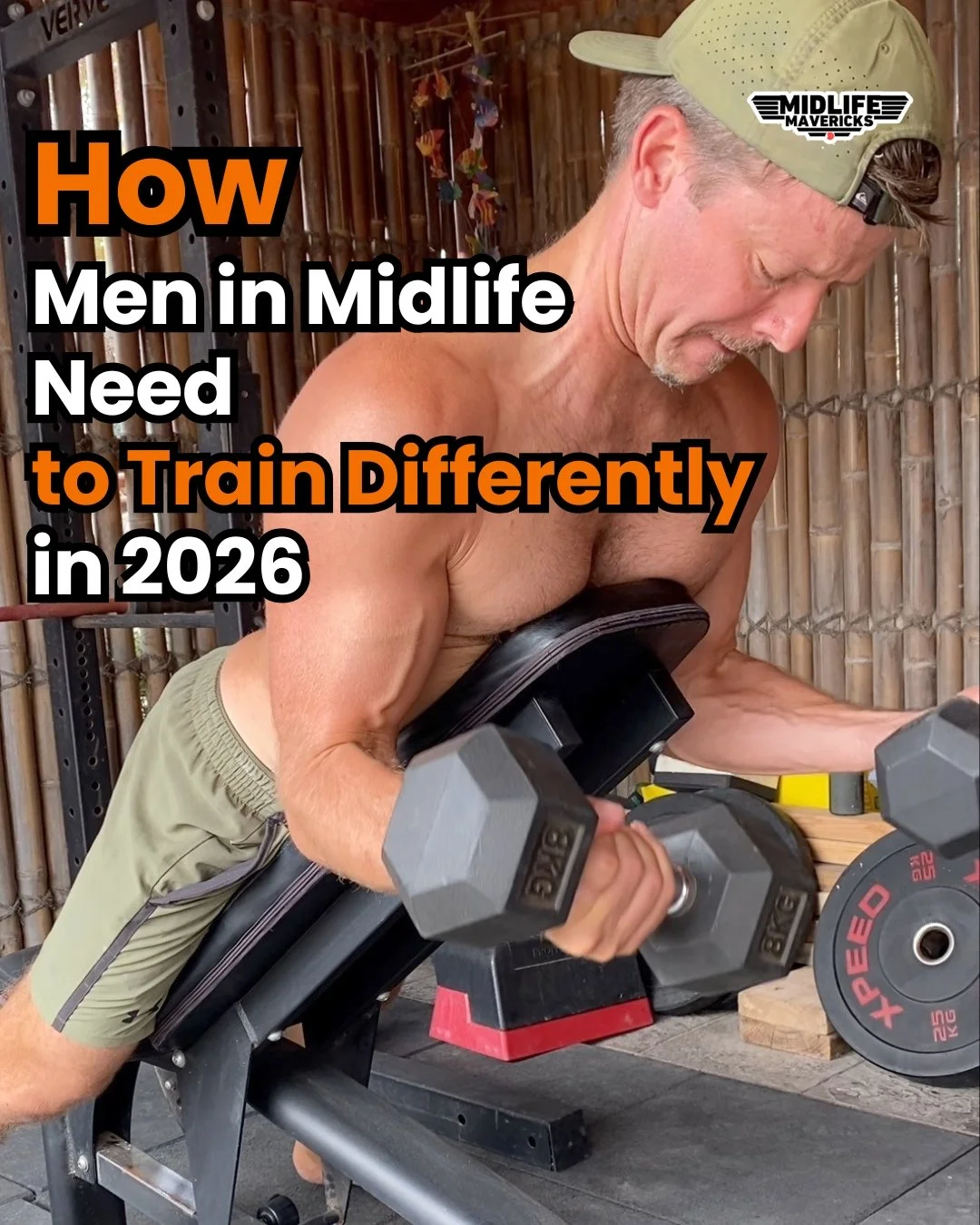
How Men in Midlife Need to Train Differently in 2026
For most men, the problem isn’t that they’ve stopped caring about their health. It’s that the way they were taught to train no longer works. In your 20s and 30s, you could get away with a lot. Miss sleep. Train hard on stress. Push through pain. Chase numbers. Ignore recovery. Your body was forgiving. But midlife is different, and if you’re honest, you already know it.

Train Like a Man With a Plan: Why Your Next 12 Weeks Matter More Than Your Next Year
Most men train the way they live, with good intentions, scattered focus, and too many priorities pulling them in different directions.
I know this because I’ve done it myself.
There were seasons where my training was all over the place, trying to build muscle, drop fat, get stronger, unlock skill work, improve mobility… all at the same time. And if you’ve ever trained that way, you already know when everything is a priority, nothing becomes a result.

Stronger for Life: Why Strength in Midlife Builds Freedom for the Future
What you do in your 40s and 50s doesn’t just shape your body today, it shapes your independence, energy, and confidence for decades to come.
The science is crystal clear: muscle and strength built in midlife are some of the strongest predictors of health, freedom, and longevity later in life.
Let’s break down what that really means (and how to make it happen without training like a 20-year-old).
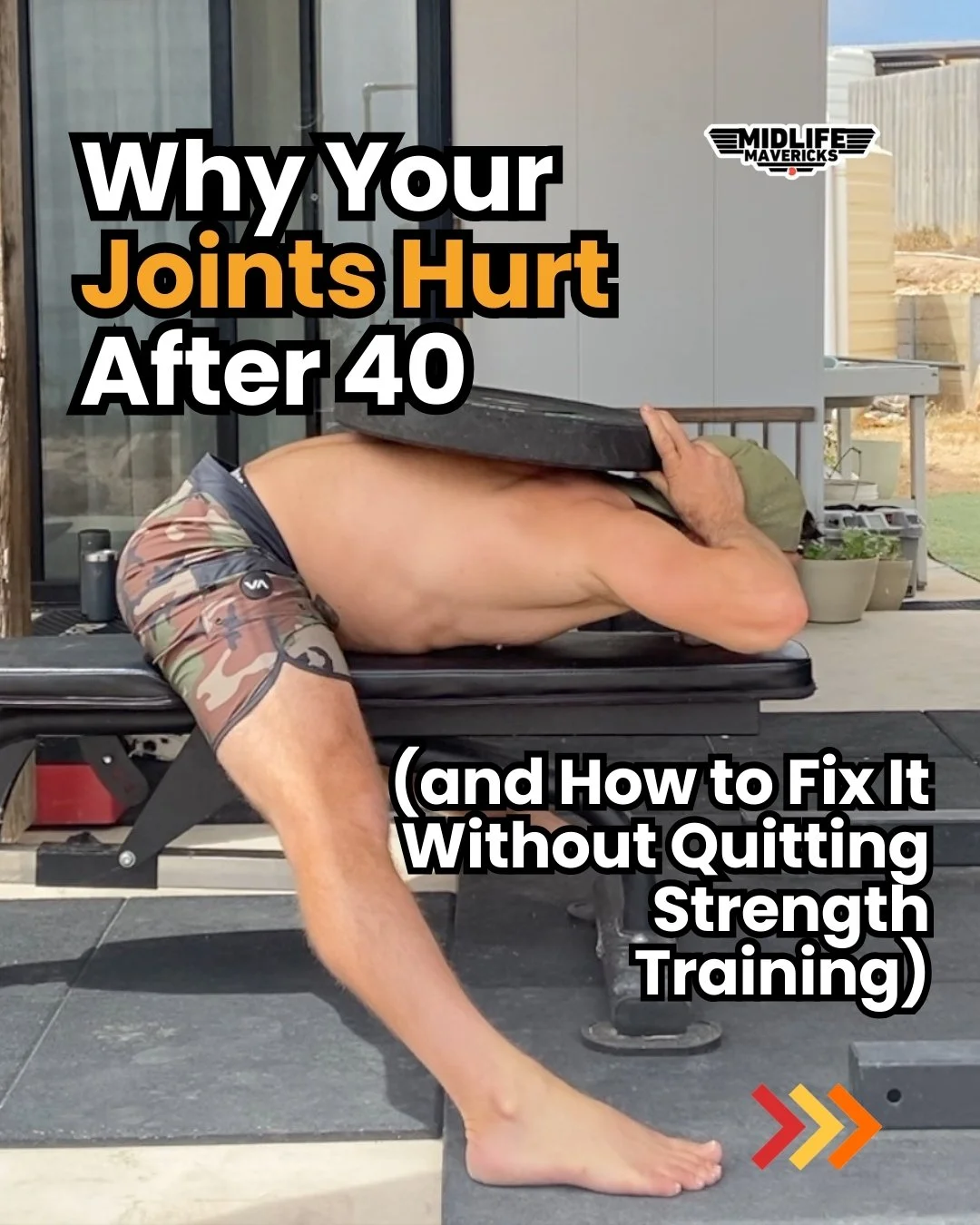
How to Protect Your Joints and Build Strength After 40
By midlife, most men carry battle scars, sore knees, cranky shoulders, and stiff backs. The problem isn’t that you’re old or broken, it’s that you’re still trying to train like you did at 25. The solution isn’t to stop lifting heavy, but to lift smarter.
Science shows that strength training is one of the best tools for protecting joints, reducing injury risk, and maintaining movement quality into later life.
Here’s what the evidence says about training sustainably, without breaking down.
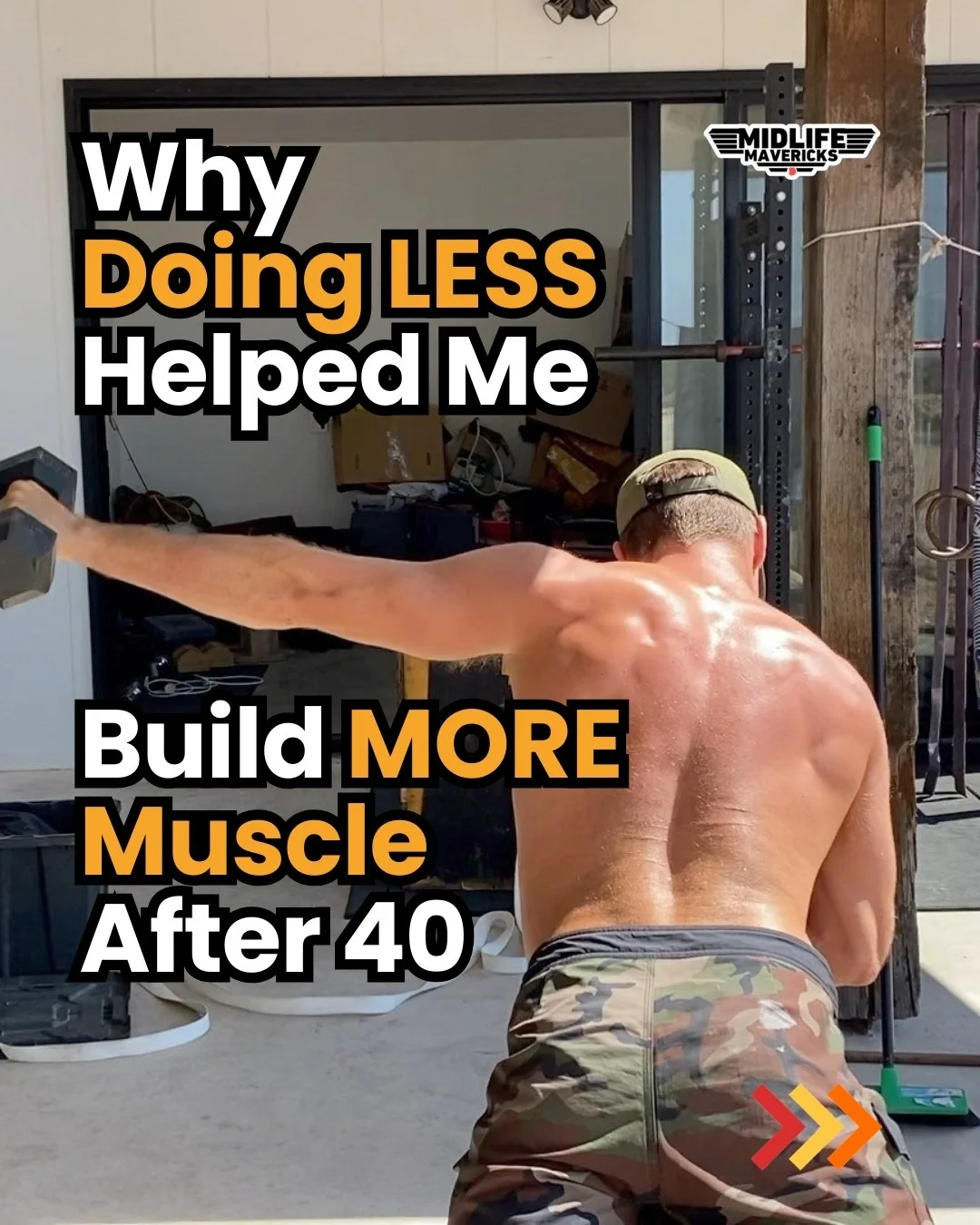
Why Doing Less Helped Me Build More Muscle After 40
There was a time in my life when I thought training harder was always the answer.
I’d hit the gym 5,6 even 7 days a week. Some sessions lasted over two hours. I figured if I just did more, I’d build more muscle. But here’s what really happened:

Why Strength Is the Foundation of Health in Midlife (And the Research That Proves It)
Many men in their 40s and 50s rely on cardio workouts, circuit training or HITT classes to stay “fit enough.” Take Mark, a 50-year-old who jogs a few times a week and does body-weight circuits occasionally. He figures that as long as he keeps his weight in check and his heart pumping, he's healthy.
But recent science suggests a missing piece: building and maintaining muscle strength.