
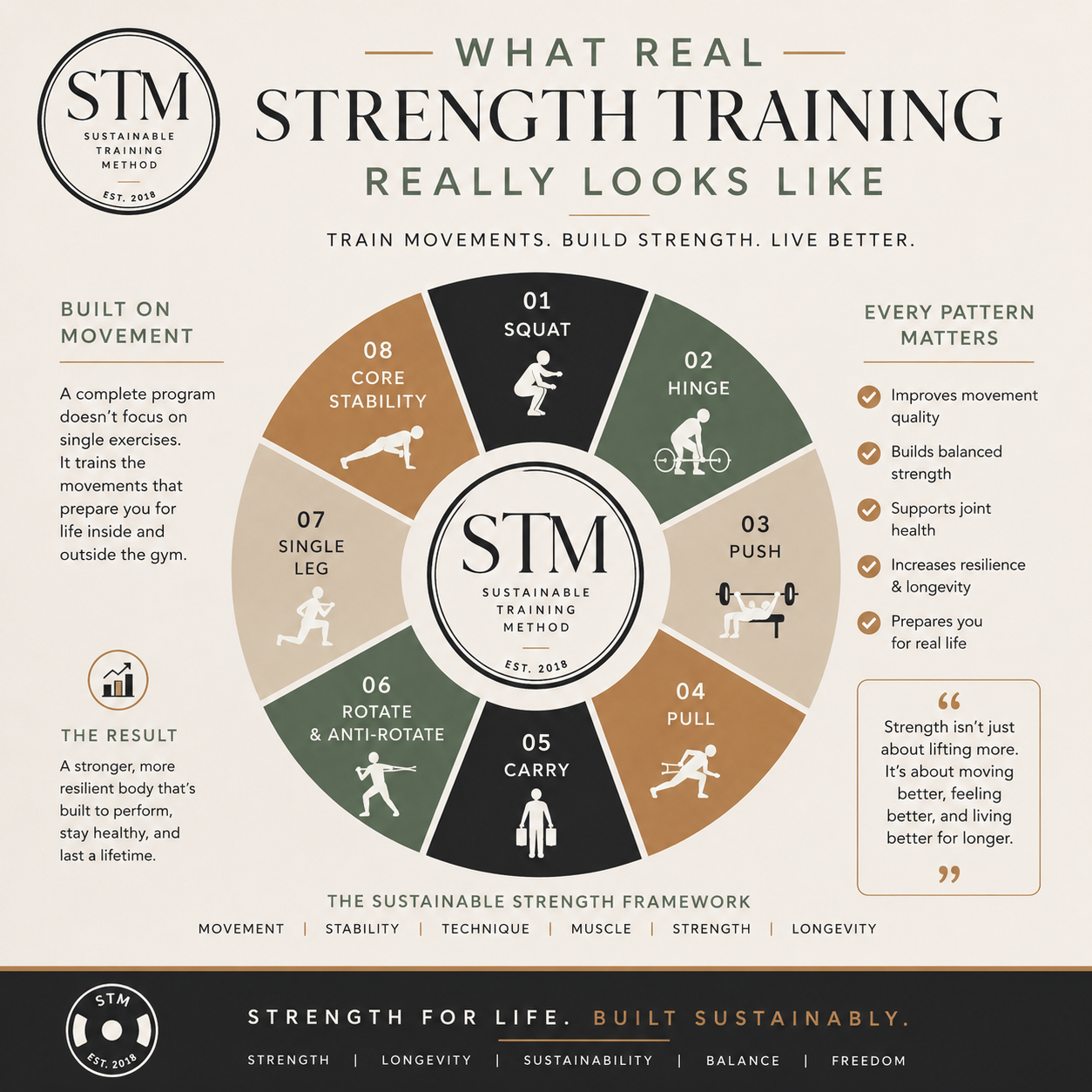
What Real Strength Training Actually Looks Like
Most people think strength training is about mastering a handful of exercises like squats, deadlifts and bench presses. But real strength training is much more than that. Discover why a complete program is built around movement patterns, structural balance, muscle development and joint health—and how the right approach helps you build a stronger, healthier body for life.
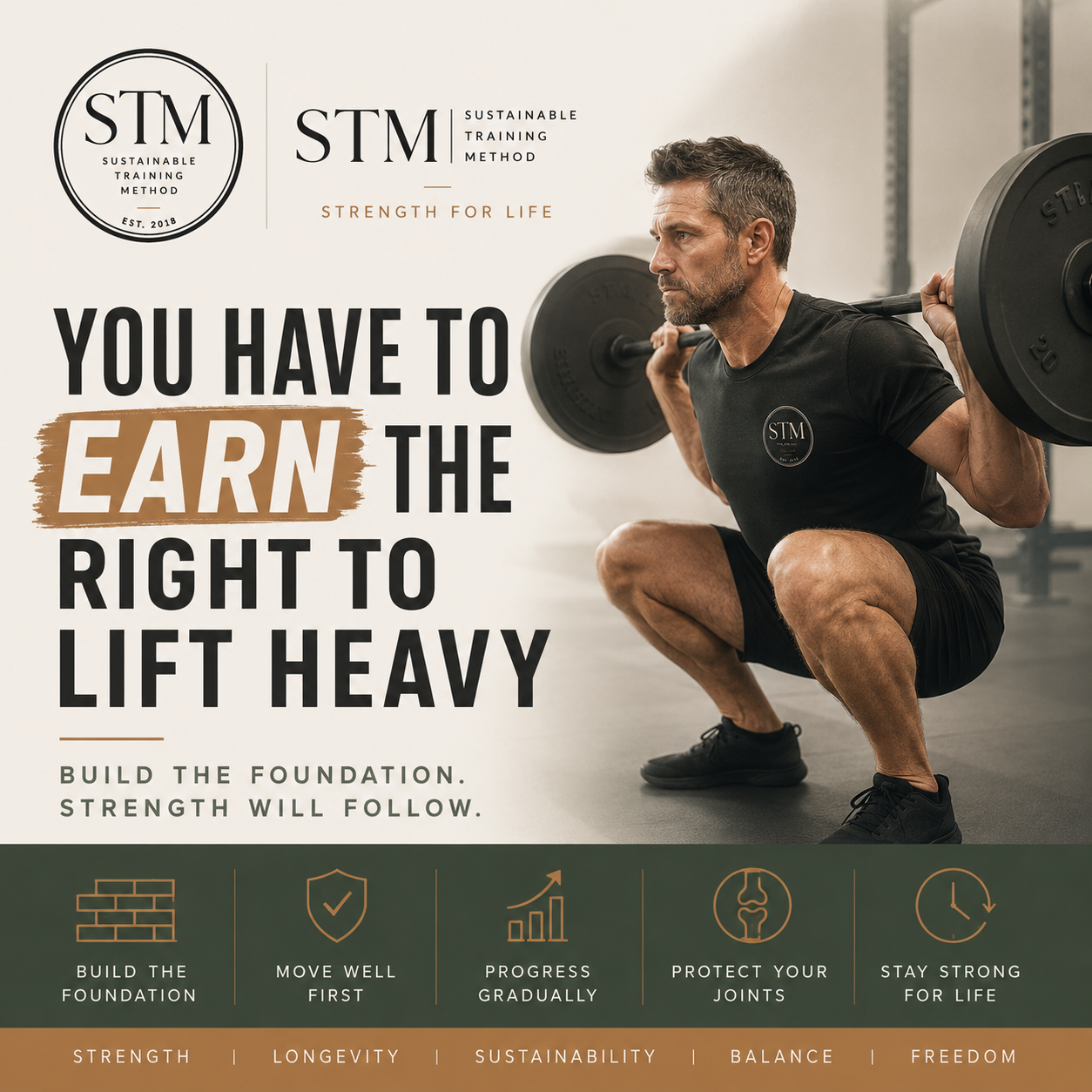
You Have to Earn the Right to Lift Heavy
Strength isn't measured by the amount of weight on the bar. It's measured by your ability to move well under load, control every repetition and stay strong for decades. Before you chase heavier weights, you need to earn the right to lift heavy by building the movement quality, confidence and resilience that sustainable strength depends on.
Is ONERO Strength Training Safe? A Strength Coach's Perspective
Blog Excerpt
Heavy resistance training has become one of the most talked-about strategies for improving bone density, and for good reason. But does that mean everyone should walk into the gym and start back squatting, deadlifting and pressing heavy weights overhead?
In this article, Stretch shares a strength coach's perspective on the ONERO approach, the importance of movement quality and progressive overload, and why building stronger bones starts with building a stronger body.
How Long Should You Follow a Training Program?
How often should you change your training program?
Too often and you never give your body time to adapt. Leave it too long and progress eventually stalls.
Learn why training in phases is one of the keys to building strength, muscle, resilience, and long-term results that last.
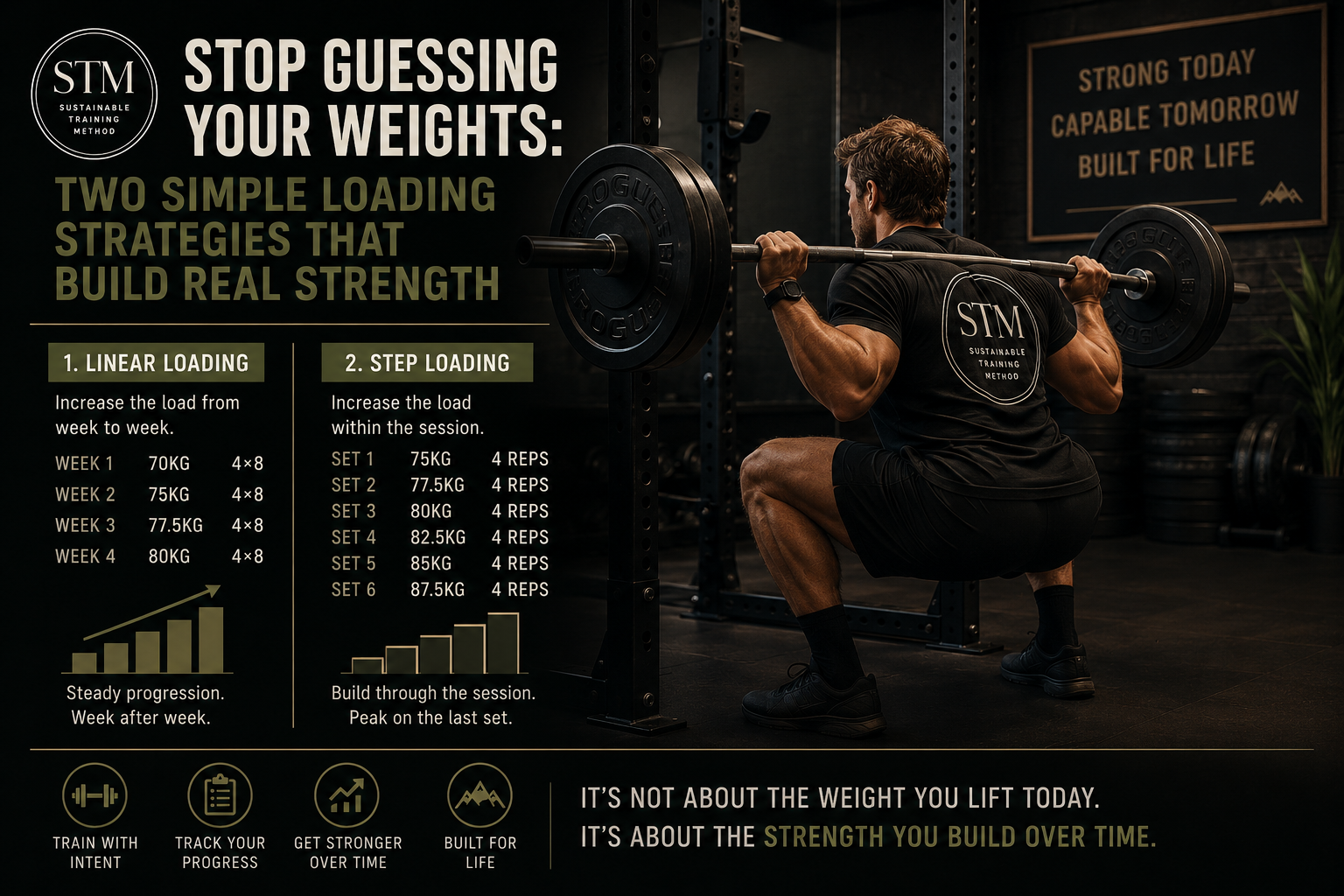
Two Simple Loading Strategies That Build Real Strength
Most people walk into the gym and guess what weight to lift. The problem is that guessing rarely leads to consistent results. Learn two simple loading strategies—linear loading and step loading—that help build strength, increase muscle, and create long-term progress through structured, intelligent training.
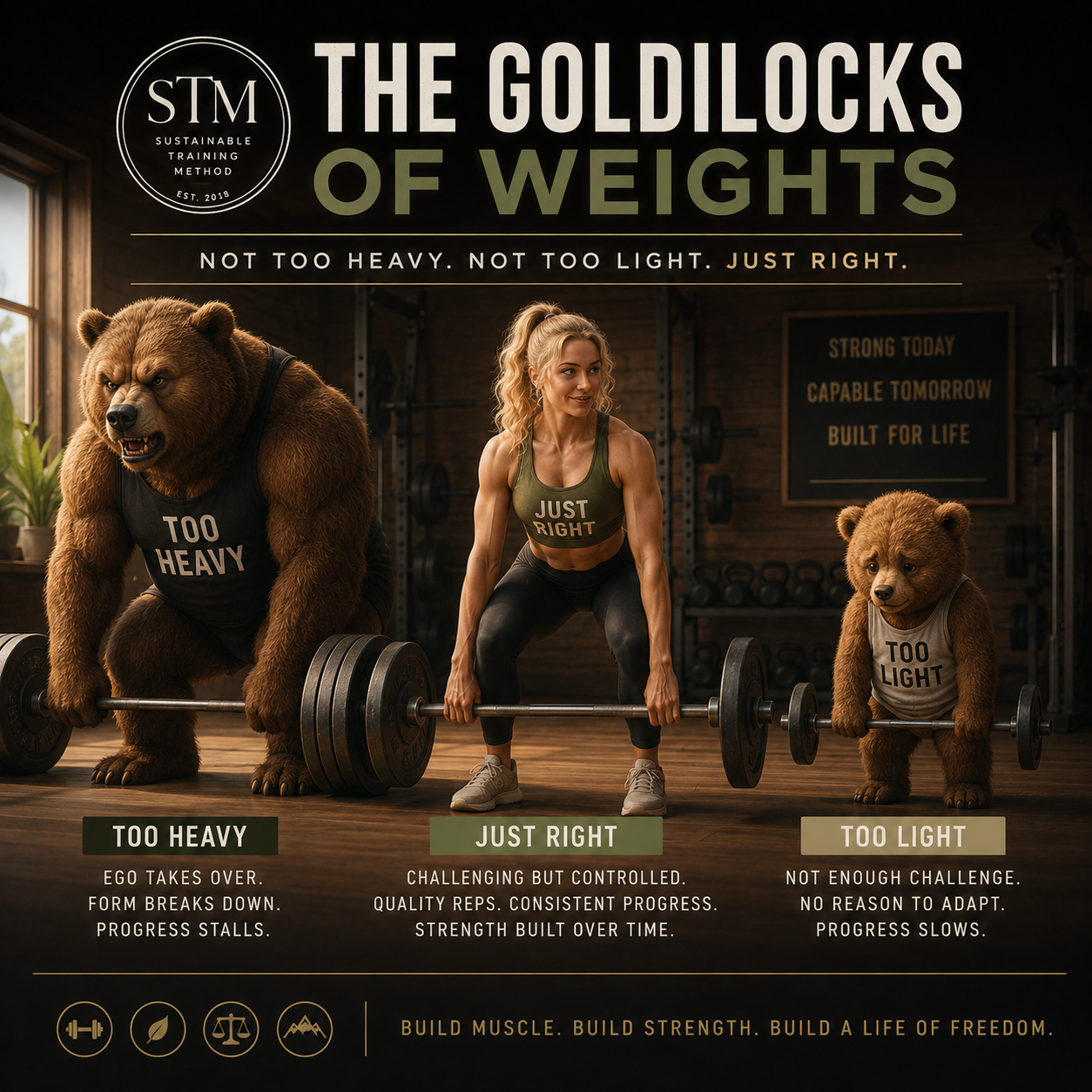
The Goldilocks Weight: Not Too Heavy, Not Too Light, Just Right
One of the things I've noticed after years of coaching people in the gym is that most people struggle to choose the right weight. Some people are constantly trying to lift more than they're capable of. Others never challenge themselves enough. Both groups end up frustrated because neither approach leads to consistent long-term progress.
The reality is that strength training works best when the weight is somewhere in the middle. Heavy enough to challenge you. Light enough to control.
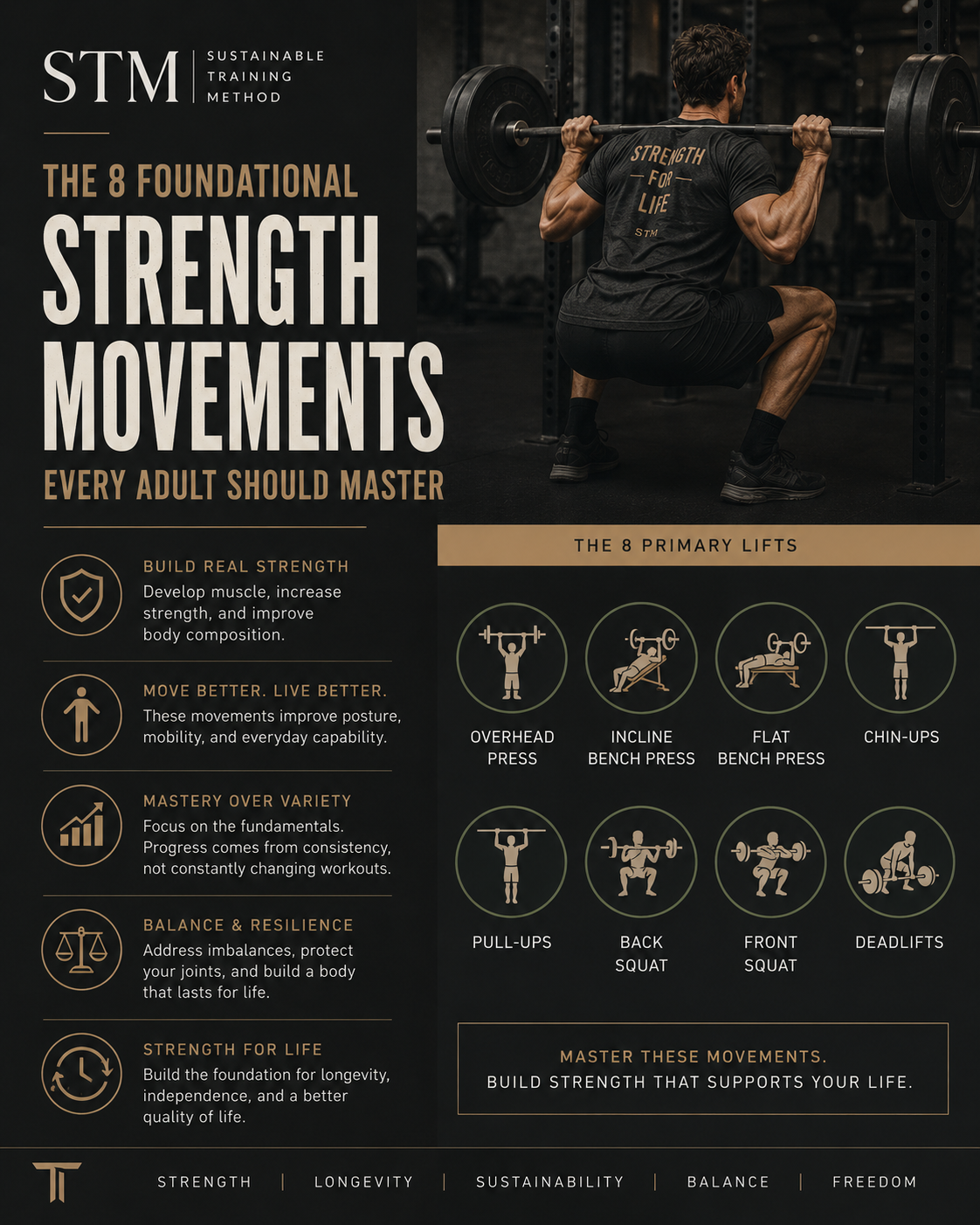
The 8 Foundational Strength Movements Every Adult Should Master
Strength training is not random exercise. Unfortunately, modern fitness culture often treats it that way. People jump between random workouts, constantly chase calorie burn, spend hours doing excessive HIIT circuits, and endlessly search for the newest exercise trend... all while never becoming truly strong, structurally balanced, or physically capable.
The goal of training should not simply be to feel exhausted. The goal should be to build a body that is strong, resilient, capable, healthy, and able to perform well for decades.
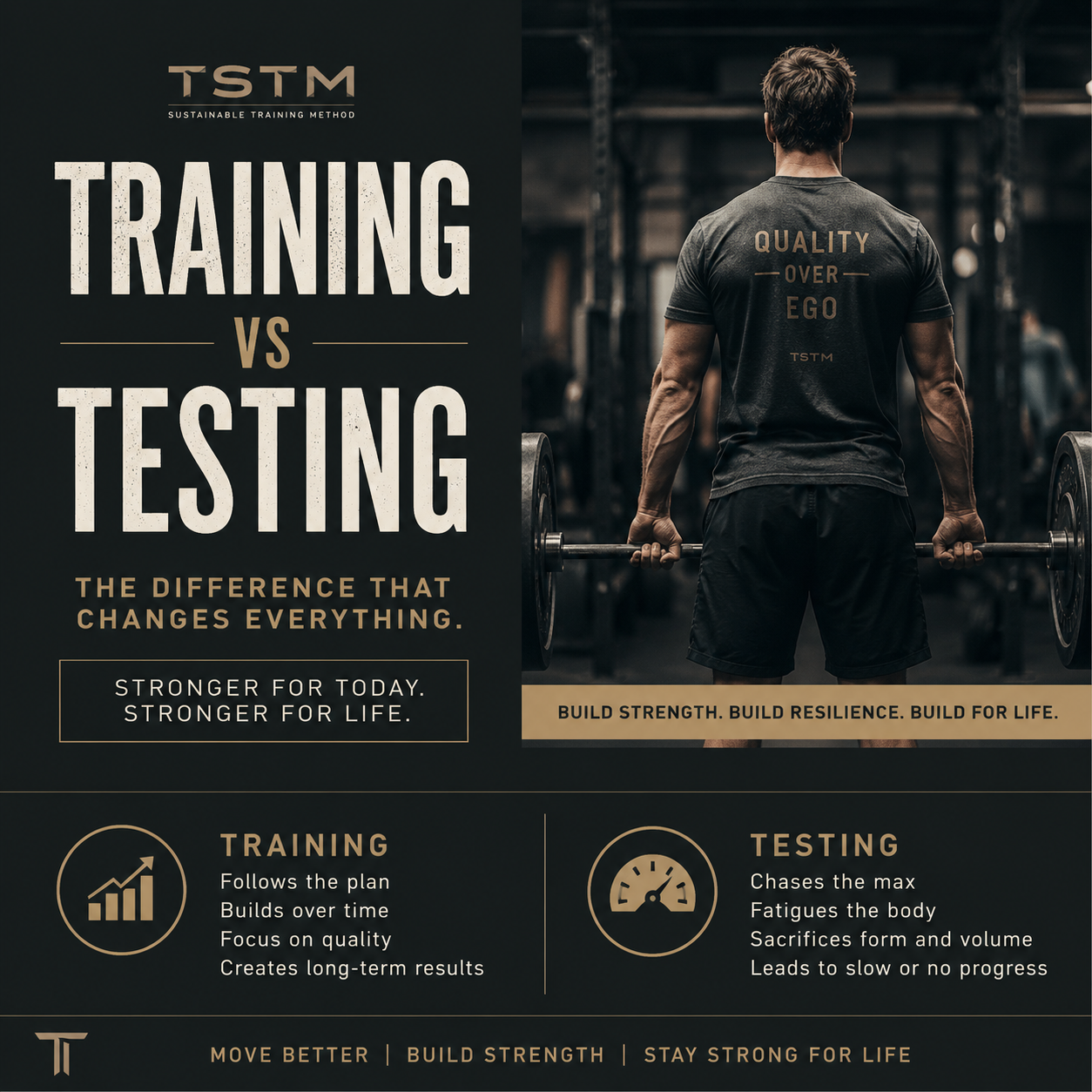
Training vs Testing: Why Most People Are Slowing Down Their Strength Progress
Walk into almost any gym and you’ll see the same thing happening. Someone loads up the bar as heavy as possible, grinds through ugly reps, loses position, shortens the range of motion, and walks away believing they had a “great session” because the weight was heavy.
This is one of the biggest mistakes in strength training that a lot of people are making.
At first, this approach often works. Strength goes up quickly. Confidence builds. The numbers on the bar increase.
But eventually progress slows down.
Nagging shoulder pain appears. Knees start aching. Lower backs tighten up. Recovery becomes harder. Motivation drops. Technique breaks down.
And most people never stop to ask the question:
Am I actually training… or am I just testing myself every session?